When an emergency alarm sounds or smoke begins to swimming pool under a ceiling, an office's safety and security society is evaluated in seconds. People do not rise to the event, they fall to the degree of their training. The chief emergency warden is the anchor point because minute. This duty is not concerning heroics, it has to do with system thinking, disciplined interaction, and measurable results such as time to full emptying, headcount settlement, and handover top quality to attending solutions. After 20 years aiding websites stand and improve their Emergency Control Organisations, I can inform you the distinction in between complication and a clean evacuation is generally the chief warden's prep work and poise.
What the chief emergency warden really owns
A chief emergency warden leads the Emergency situation Control Organisation, the small group billed with managing incidents until emergency situation services assume control. The range extends far beyond a fire drill. It covers planning, training, real-time reaction, and healing, mapped to website risks and legal obligations. In Australia, proficiencies typically straighten to PUAFER systems, normally puafer005 operate as part of an emergency control organisation for wardens and puafer006 lead an emergency control organisation for chief wardens, yet the concepts travel well to most jurisdictions.
At a sensible level, the chief warden has the feedback framework. That suggests the emergency treatments, the warden framework and protection per floor or area, warden training cadence, communications devices and screening routines, and the liaison protocols with the fire brigade or equal companies. Throughout an occurrence, they make the calls nobody else can: partial or complete discharge, shelter in what colour helmet does a chief warden wear position, lift or refute re-entry, allocation of wardens, and termination of the alarm once verified safe.
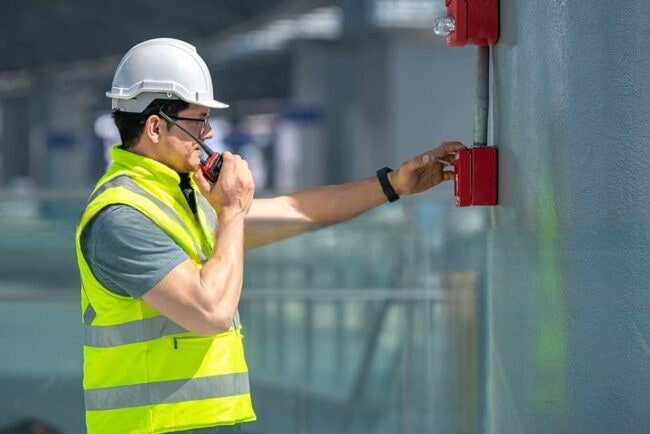
People often inquire about identifiers. For quick acknowledgment, wardens use helmets or hats in clear colours. A typical schema is red for area wardens, white for the chief warden, and yellow for communications. The exact combination can differ by website or jurisdiction, so document it, orient it throughout inductions, and maintain extra identifiers with radios. It is not vanity equipment. In smoke, noise, or groups, a clear sign cuts through. If you have actually ever attempted to work with 800 individuals on a rainy winter months morning on a wind-swept assembly point, you will certainly value the worth of a noticeable chief warden hat or headgear. If your group discussions what colour helmet the chief warden puts on, pick one that is distinct at distance. White stays typical and functional.
From framework to muscle mass memory
Procedures alone do not carry a reaction. Muscle memory does. Teams attain it by integrating warden training with routine operations. This is where a puafer005 course and puafer006 course make a functional distinction. PUA units bring a common language and expected efficiency criteria. For wardens that full puafer005, the emphasis is on function clarity, search patterns, evacuation routes, and aiding owners with added requirements. For chief wardens who full puafer006, the emphasis changes to leadership under stress, info triage, and the mechanics of leading an emergency control organisation end to end.
I favor to blend official training courses with site-specific drills. A generic fire warden course develops structures, however a stockroom with high-rack storage behaves in a different way from a skyscraper workplace, and an information centre with gaseous reductions needs different decision thresholds than a childcare facility. Construct scenarios that match your risks. Stage a smoke machine examination to examine detector reasoning. Mimic a lawn sprinkler seclusion failing. Run a two-zone alarm where the resource can not be validated within 3 minutes. Your response timings, radio discipline, and choice logs will certainly tighten up rapidly.
Training must cover equipment also. Radios fall short in concrete cores. PA systems clip in stairwells. Floor plans go out of day when fit-outs move. A competent chief fire warden establishes a monthly confirmation rhythm: test every handheld, inspect spare batteries or chargers, stroll the discharge courses, and confirm that sanctuary points are sensible, not theoretical. Do not contract out every one of this to centers. The chief warden needs personal experience with the foibles of the site.
Decision-making under pressure
The hardest part of the duty is not announcing emptyings. It is choosing under unpredictability while the clock is running. Three constraints dominate: minimal info, time compression, and human behavior. The chief warden's task is to form those restrictions right into practical choices.
Most incidents begin with a signal, not a tale. The fire indicator panel shows a zone in alarm system, a detector kind, maybe a second mistake. Lifts remember. Individuals begin to ask inquiries that have no immediate solution. A great chief warden has a psychological triage:
First, confirm life security. Can occupants stay put without raising danger for the following couple of minutes? Or exists a prompt threat that demands a basic discharge? Signals that tilt in the direction of instant emptying consist of visible smoke beyond the origin, simultaneous alarm systems in several zones that share a shaft or ceiling gap, or loss of pressurization in stairwells.
Second, tighten up info loops. Deploy a flooring or area warden to the origin area with a radio and clear language. Do not send more than required. One pair can observe and report without obstructing stairwells. Ask for specifics: no smoke, light haze, noticeable fire, smell toughness, warm at door, sound of reductions discharge. This self-displined language stays clear of loud records like "appears fine."
Third, determine for the majority. If the signal can not be verified promptly, a conventional decision shields the lots of. A full discharge imposes expense and interruption, yet the expense of delay when a fire is expanding behind a riser door is orders of magnitude higher. Be ready to defend the call later on with your log and timing.
I maintain a straightforward, three-line log throughout online events: time, action, reason. 10:03, partial discharge Degrees 10 to 12, unverified smoke Degree 11 ceiling void. 10:06, intensified to complete structure discharge, second alarm Level 10 return air plenum, unidentified spread. These couple of words will be gold when instruction the fire solution on arrival or explaining to administration why 1,200 individuals depended on the street for 35 minutes.

The peaceful job that makes sounds unnecessary
The best primary wardens are unseen most of the year. They do the silent work others avoid. They stroll the fire staircases, count the number of doors that are wedged open, and obtain those wedges thrown out. They check out assembly points at 7:30 a.m. when delivery trucks in some cases obstruct the curb, after that work out with structure management to paint a keep-clear area. They ensure the fire warden training requirements are not simply ticked in a knowing administration system, but demonstrated throughout drills and videotaped with action items. When an individual with restricted movement signs up with a group on Level 19, they upgrade the Personal Emergency situation Evacuation Strategy that week, not after the next drill. This is the craft of the role.
Fire warden requirements in the work environment differ by jurisdiction and structure course, however they share core assumptions: adequate protection across all inhabited locations and shifts, expertise aligned to the threat account, and proof of training and drill efficiency. A practical proportion in a workplace is about one warden per 20 to 30 owners per zone, yet adjust for layout complexity and movement needs. For a storage facility or production flooring with higher noise and plant risks, include even more wardens and ensure visibility equipment is part of the warden kit.
What the colours mean, and why people ask
People love asking about fire warden hat colour or chief warden hat colour. It is a functional inquisitiveness with a social advantage. Clear colour conventions quit disputes throughout events. You can choose your very own schema if none is mandated, however stay with high-contrast colours that residents can detect at 20 to 30 meters in mixed light. White for the chief warden, red for wardens, and yellow or environment-friendly for interactions or first aid prevail patterns. The factor is acknowledgment. When somebody asks what colour helmet a chief warden uses, they are normally additionally asking, that do I follow when I am emphasized? Answer both plainly in inductions and signs. If you currently have a chief warden hat or helmet stock, inspect it twice a year for splits, faded colour, and the condition of chin straps. Helmets obtain tossed in cupboards and age quicker than you expect.
The 2 programs that anchor competence
In Australia's training structure, puafer005 and puafer006 develop the backbone for office wardens and chief wardens. Plenty of service providers run a puafer005 course for general wardens and a puafer006 course for primary wardens. The puafer005 operate as part of an emergency control organisation program gears up wardens to carry out instructions securely, browse their zones, help evacuations, and interact effectively. The puafer006 lead an emergency control organisation program concentrates on preparation, leadership, and coordination, consisting of exactly how to brief emergency situation solutions and manage post-incident actions.
A great emergency warden course will certainly not show only concept. It ought to simulate radio blockage, obstructed egress, and incomplete information. In my sessions, I occasionally eliminate 2 radios mid-exercise to simulate battery failing, then see whether the group reroutes messages via the PA or runners. That kind of stress test subjects fragile presumptions before a genuine event does.
For work environments not sure where to start, a blended warden course with a site walk-through is the lowest-friction access factor. You can after that develop an annual cycle that consists of one full evacuation drill, one partial drill, one desktop computer situation for the chief warden and deputies, and quarterly devices checks. The chief fire warden training should be revitalized every two to three years, sooner if your website risk account changes.
Communication that makes compliance
People adhere to clear, qualified voices. Throughout cases, the chief warden's words matter as long as the alarm system audio. Keep announcements short and certain. Rather than a generic "Please evacuate the building," attempt "Focus, all owners on Levels 10 to 12: evacuate by means of the fire staircases currently. Do not utilize lifts. Proceed to Setting Up Point A on George Road. Wardens will certainly help." Time stamps help. Give updates every two to five minutes throughout expanded evacuations. Silence breeds speculation.
Radio self-control is found out, not assumed. Use telephone call indications that map to duties and zones. Limit transmissions to necessary info and demands. Appropriate delicately but firmly when a person clutters the channel with discourse. During a drill last year, we determined a 40 percent improvement in emptying time after coaching wardens to use conventional phrases rather than conversational radio chatter.
Managing people that can not self-evacuate
Every site has people for whom staircases are not practical, whether permanently or temporarily as a result of injury or pregnancy. The chief warden makes certain there are Individual Emergency Situation Evacuation Strategies in place which wardens understand the area of refuges and emptying chairs. Emptying chairs are wonderful when wardens are educated and strong enough to use them securely. They are dangerous when team improvise under tension. Determine early that will run the chairs and practice the descent in a controlled setting. In numerous structures, the safer option throughout smoke-free alarms is to shelter in a stair touchdown sanctuary with wardens published, after that evacuate with fire service aid if conditions wear away. Paper this and orient the individual so they understand the plan and depend on it.
Partial emptyings, false alarms, and the cost of overreaction
Not every alarm validates a full-building discharge. A toaster oven in a degree 3 kitchen space throughout peak rainfall will send out thousands of individuals outside at an efficiency expense, as well as direct exposure risk, if you constantly clear the building on signal. Partial emptyings exist for a reason. If your fire indicator panel and structure systems support zoned discharge and you have dependable confirmation from wardens, utilize it. Establish limits in your emergency situation strategy: for a solitary, non-propagating alarm system with no smoke movement and very early reductions, leave the damaged floor and the one above. If you can not get eyes on or the detector remains in a high-risk location such as a server room or plant room, expand the reaction quickly.
False alarm systems are never ever cost-free. After a series of them, occupants tune out. A chief warden has an obligation to decrease problem triggers by collaborating with facilities on upkeep: normal detector cleaning, heat detector replacement in kitchen areas where allowed, toaster bans in issue areas, enhanced door closers to preserve smoke separation. Keep a log of alarm reasons. Patterns will certainly emerge, and you can deal with them.
Handovers that help firefighters aid you
When the fire brigade or emergency services get here, your task tightens to precise info handover and assistance. They desire what is true, recent, and valuable. Prepare to provide the complying with without fuss.
- Time of alarm system, areas influenced, and present panel indications. Known reason or monitorings from wardens, consisting of smoke, heat, flames, smells, and suppression status. Occupant condition: left, partial, unidentified, and anybodies safeguarding in place with locations. Building systems: lawn sprinklers or gas reductions standing, stair pressurization, lifts remembered, seclusions in place. Access: keys, fire control room location, roof accessibility, and any type of threats such as lithium battery storage or chemicals.
I keep a laminated punctual in the fire control room to maintain this limited. It saves minutes in one of the most pricey time home window of an incident. After handover, remain offered but do not crowd the operations. Your following emphasis is accountability of individuals and well-being at setting up points.

Post-incident healing and the part no one enjoys
Once an event finishes, there is a strong pull to get everyone back within and go back to function. Stand up to the urge to rush. Take ten mins for a fast warm debrief while memory is fresh. What worked? What slowed us down? Which radios failed? Did anyone struggle with the PA? Did the assembly point hold everybody securely, consisting of service providers and visitors? Record 3 to five activities, appoint proprietors, and put dates on them. After that do a fuller cool evaluation within a week, with logs and times. This is where the chief warden makes lasting depend on, by transforming lived rubbing right into improvements.
Your record should be factual and sensible. Prevent blame language. A sentence like "Evacuation lag on Level 14 because of vague PA message at 10:05; action: upgrade template and re-train drivers" helps more than "Level 14 slow-moving to evacuate." Consist of pictures if they aid. Administration will fund modifications if you reveal the web link in between a little solution and faster, much safer outcomes.
Selecting and sustaining the best people
Chief warden needs are not a lengthy checklist of hero qualities. You need a stable character, enough authority to influence peers, and real regard for process. In larger sites, designate replacements to cover leave and shifts. Spread skills throughout departments so the role does not collapse when one team turns over.
Recruit wardens with the very same intent. Individuals that recognize their floor and are respected by colleagues make far better wardens than volunteers who simply want the headgear. Clear up time assumptions. Warden training is not a once-a-year rule. Drills, equipment checks, and occasional after-hours tasks will certainly be part of the task. Recognize the contribution. Recognition during town halls or little thank-yous go even more than you expect.
Building a pragmatic training strategy that fits the work
Training sheds power when it is separated from truth. Tie the cadence to your company rhythm. For workplaces, avoid end-of-quarter crisis and routine drills early in the day to minimize disturbance and fatigue. For storehouses, stagger drills by area to maintain operations relocating. For hospitals chief warden safety equipment colour and aged treatment, run compartment-based workouts that replicate smoke motion without relocating at risk individuals. Where policies call for yearly evacuation method, go beyond the minimum with at the very least one unannounced scenario annually, within reason.
If you are establishing from square one, start with these 5 elements and increase when they run smoothly.
- Nominate a chief warden, deputies, and area wardens across all inhabited zones and changes, then publish the roster. Deliver emergency warden training targeted to functions: puafer005 for wardens, puafer006 for chief/deputies, plus website induction refreshers. Test communications: radios, PA, and backup approaches. Change batteries and label battery chargers by zone. Run a tabletop for the leadership group, walking through decision points, partial emptyings, and handovers to fire services. Conduct a complete evacuation drill with timed liability, complied with by a short hot debrief and a written action list.
Edge cases that separate the prepared from the lucky
Not every emergency situation is a textbook fire alarm. Lithium-ion battery thermal runaway creates poisonous fumes fast. A sprinkler head sheared by a forklift can look safe until water stress collapses a ceiling floor tile onto a stairway landing. A gas reductions misfire in a server space can produce an oxygen-depleted environment. The chief warden must understand the site's strange dangers all right to adjust decisions.
If your site stores batteries, know the area and quantity, the ventilation, and the preferred reaction. Compose it right into your strategy. For data centres with aeriform systems, quick wardens on the pre-discharge warning sequence and lockout procedures. For high-rise buildings undergoing repair, track short-term egress adjustments weekly. Momentary hoardings and locked doors have caught greater than one evacuation.
COVID-era building adjustments presented an additional edge situation that lingers: altered airflows and closed dampers. Ensure your mechanical controls straighten with your emptying assumptions. A covered stairwell with failed pressurization is not a risk-free path.
Measuring what matters
Stop thinking. Action. Useful metrics consist of ordinary time to initiate discharge after alarm, time to clear each floor, overall time to all-clear at setting up, percent of owners made up, and radio uptime. Over a year, these numbers tell you where to tighten up. If Degree 7 regularly delays by 2 minutes, walk it. Maybe a labyrinth of work areas or a culture of ending up emails is the culprit. Repair the format or the message.
Track training conclusion and recency, especially for chief warden training and delegate protection. If your emergency warden course conclusions dip below 80 percent of your roster, anticipate efficiency to sag. It is not moral failure. It is capability decay.
Getting functional regarding signs and signage
Clarity defeats brains. Put warden photos and names near lifts on each flooring so individuals recognize them. Mark discharge courses with arrows at eye height and at knee elevation for great smoky problems. Put your chief warden hat, spare radios, high-visibility vests, and floor plans in a solitary, unlocked cupboard in the fire control room or equivalent. Tag it in large letters. If you can, include a small torch for each and every radio. When the power goes and your generator takes a min, you will be glad you did.
What good appear like on a negative day
A well-led emergency situation has a feeling to it. The alarm system seems. The chief warden recognizes the panel within seconds. Location wardens relocate to pre-planned positions and check priority spaces. Announcements are crisp, not theatrical. Occupants increase, collect fundamentals if safe to do so, and circulation to staircases without argument. Radios live however tranquil. At the assembly point, wardens report their headcounts and exceptions without drama. The chief warden updates owners every couple of mins, even if the message is just, "Stand by, reacting teams are exploring. We will certainly recommend shortly." When crews arrive, the handover is efficient and the chief steps back. Afterward, the group catches 2 or 3 enhancements and actions on.
No one applauds at the end. They do not require to. The measure of the chief emergency warden is not excitement. It is the rate and safety with which people venture out, the quality of details handed to firemans, and the lessons carried forward. That is the craft. It is discovered, exercised, and silently kept ready.
If your office has been avoiding structured warden training, start. Enrol wardens in a reputable fire warden course lined up with puafer005, and your principal in a puafer006 lead an emergency control organisation program. Stroll your website with fresh eyes, update your treatments, and examine your interactions. Pick a clear colour for the chief fire warden hat and make sure everybody knows it. The very first time you need the system to function, you will certainly want it to really feel familiar, nearly routine. That is the power of preparation.
Take your leadership in workplace safety to the next level with the nationally recognised PUAFER006 Chief Warden Training. Designed for Chief and Deputy Fire Wardens, this face-to-face 3-hour course teaches critical skills: coordinating evacuations, leading a warden team, making decisions under pressure, and liaising with emergency services. Course cost is generally AUD $130 per person for public sessions. Held in multiple locations including Brisbane CBD (Queen Street), North Hobart, Adelaide, and more across Queensland such as Gold Coast, Sunshine Coast, Toowoomba, Cairns, Ipswich, Logan, Chermside, etc.
If you’ve been appointed as a Chief or Deputy Fire Warden at your workplace, the PUAFER006 – Chief Warden Training is designed to give you the confidence and skills to take charge when it matters most. This nationally accredited course goes beyond the basics of emergency response, teaching you how to coordinate evacuations, lead and direct your warden team, make quick decisions under pressure, and effectively communicate with emergency services. Delivered face-to-face in just 3 hours, the training is practical, engaging, and focused on real-world workplace scenarios. You’ll walk away knowing exactly what to do when an emergency unfolds—and you’ll receive your certificate the same day you complete the course. With training available across Australia—including Brisbane CBD (Queen Street), North Hobart, Adelaide, Gold Coast, Sunshine Coast, Toowoomba, Cairns, Ipswich, Logan, Chermside and more—it’s easy to find a location near you. At just $130 per person, this course is an affordable way to make sure your workplace is compliant with safety requirements while also giving you peace of mind that you can step up and lead when it counts.